
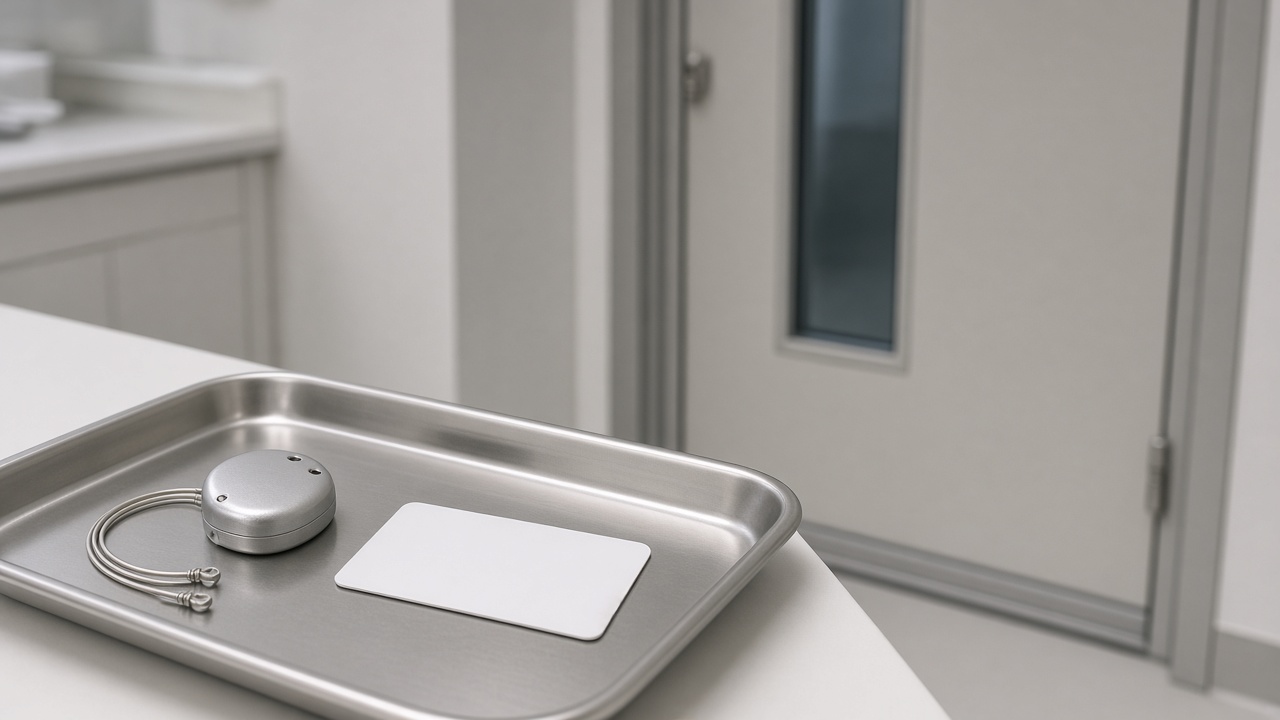
Not every implant is the same
A strong MRI magnet can move, heat or switch off some devices. That is why every clinic asks about pacemakers, defibrillators, cochlear implants, neurostimulators, aneurysm clips and insulin pumps before the scan.
Many modern devices are labelled MRI-conditional. That does not mean “safe in any scanner”. It means the scan is allowed only with a specific field strength, body position and device setting. An older device may not be safe at all.
What to bring
- The implant card or the exact model name from your specialist.
- The year it was placed, if you know it.
- Any letter that says the device is MRI-conditional.
What the clinic will do
Staff check the device against the manufacturer conditions. Some pacemakers need a cardiology team to switch them to an MRI mode before the scan and back afterwards. If the model cannot be confirmed, the scan is postponed. That is a safety stop, not a refusal of care.
Orthopaedic screws, joint replacements and most coronary stents are often safe after the tissue has healed, but the team still needs to know they are there. Tell them even if a previous hospital already scanned you.