
What is an MRI scan?
MRI stands for magnetic resonance imaging. It is a medical scan that creates detailed pictures of the inside of your body. Doctors use it to look at organs, soft tissues, joints, the brain, the spine, and many other structures.
Unlike X-rays or CT scans, MRI does not use ionizing radiation. Instead, it uses a strong magnet, radio waves, and a computer to produce images. This makes MRI especially useful when doctors need clear detail of soft tissues.
How does MRI work?
During an MRI scan, the machine uses a strong magnetic field to affect the hydrogen atoms in your body. Radio waves are then sent into the body, and the machine detects the signals that come back. A computer turns those signals into images.
You do not usually feel the magnetic field itself. The scan is painless, but the machine can be noisy, and you need to stay still so the images are clear. In some cases, a contrast agent may be used to make certain structures easier to see.
What is MRI used for?
MRI is used in many parts of medicine because it gives very detailed images. It can help doctors:
check the brain for injuries, tumors, or other problems.
examine the spine, nerves, and discs.
look at joints such as the knee, shoulder, or hip.
evaluate organs in the chest, abdomen, or pelvis.
study blood vessels in some cases.
monitor how a condition is changing over time.
MRI is especially helpful when a doctor needs more detail than an X-ray can provide.
What happens during the scan?
Before your MRI, you may be asked to remove jewelry, watches, hearing aids, or other metal items. You may also need to answer safety questions about implants, surgery, or other medical devices.
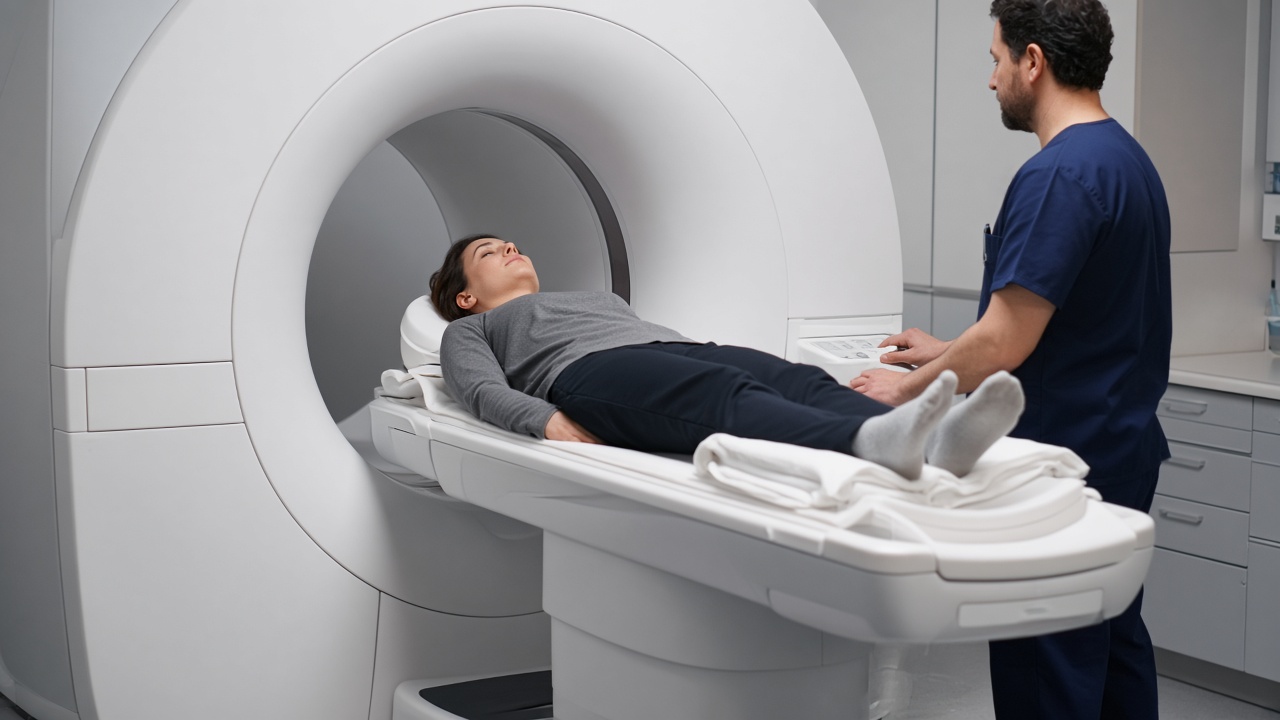
During the scan, you usually lie on a table that slides into the MRI machine. The technologist will help position you and then leave the room, but they can still see and hear you during the exam. The scan may take around 30 to 60 minutes depending on the body part being examined and whether contrast is needed.
It is important to stay as still as possible. Movement can blur the images and may mean the scan has to be repeated.
Is MRI safe?
For most people, MRI is considered safe. That said, safety screening is very important because the strong magnet can affect certain implants, devices, or metal objects in or on the body.
Before the scan, always tell the medical team if you have:
a pacemaker or implanted heart device.
metal implants or clips.
cochlear implants.
a history of surgery with metal hardware.
pregnancy.
kidney problems, if contrast may be used.
The screening process helps make sure the scan is appropriate and safe for you.
Why doctors recommend MRI
Doctors often recommend MRI when they need a very detailed look inside the body. It can help them find the cause of pain, assess an injury, confirm a diagnosis, or plan treatment.
Because MRI gives such clear images of soft tissue, it is often used in neurology, orthopedics, oncology, cardiology, and general radiology. It is one of the most useful imaging tools in modern medicine.
When you might need one
You might be sent for an MRI if you have:
ongoing pain that needs more investigation.
a suspected sports injury.
headaches or neurological symptoms.
back pain with possible nerve involvement.
a lump or abnormal finding that needs more detail.
a condition that needs follow-up imaging.
A doctor decides whether MRI is the best test based on your symptoms and medical history.
Key points to remember
MRI is a non-invasive scan that uses magnets and radio waves to create detailed images of the body. It is especially useful for soft tissues, organs, joints, and the nervous system. The scan is usually painless, but it requires safety screening and stillness during the exam.
FAQ
What does MRI stand for?
MRI stands for magnetic resonance imaging.
Does MRI use radiation?
No. MRI does not use ionizing radiation.
Is an MRI painful?
No, the scan itself is usually painless.
How long does an MRI take?
Many scans take about 30 to 60 minutes, but it depends on the type of exam.
Why would a doctor order an MRI?
A doctor may order an MRI to get detailed images that help diagnose or monitor a medical condition.