
Mammography first, MRI for specific questions
In the Netherlands, breast screening is organised around mammography through the national programme for women aged 50 to 75. Mammography is the test with the strongest evidence for reducing deaths from breast cancer at population level. Breast MRI is more sensitive, but it is not a general screening tool; it is reserved for defined groups and specific clinical questions.
When breast MRI is used
- High genetic risk — women with a BRCA1, BRCA2 or comparable mutation are offered annual MRI, often alongside mammography, starting well before screening age.
- Dense breast tissue — where mammograms are difficult to read and a suspicion remains.
- Staging a known cancer — assessing the extent of disease and looking for additional lesions before surgery.
- Monitoring treatment — measuring the response to chemotherapy given before an operation.
- Implants — assessing silicone implant integrity and the tissue behind them.
- Unclear findings — when mammography and ultrasound disagree or leave a question open.
The trade-off: sensitivity against false alarms
Breast MRI finds more cancers than mammography, but it also flags more areas that turn out to be harmless. In a high-risk group that trade-off is worth making, because the chance that a finding is real is higher. In women at average risk, the same sensitivity produces a large number of additional biopsies and a great deal of anxiety for a small gain. This, rather than cost or availability, is the main reason MRI is not offered to everyone.
How the examination works
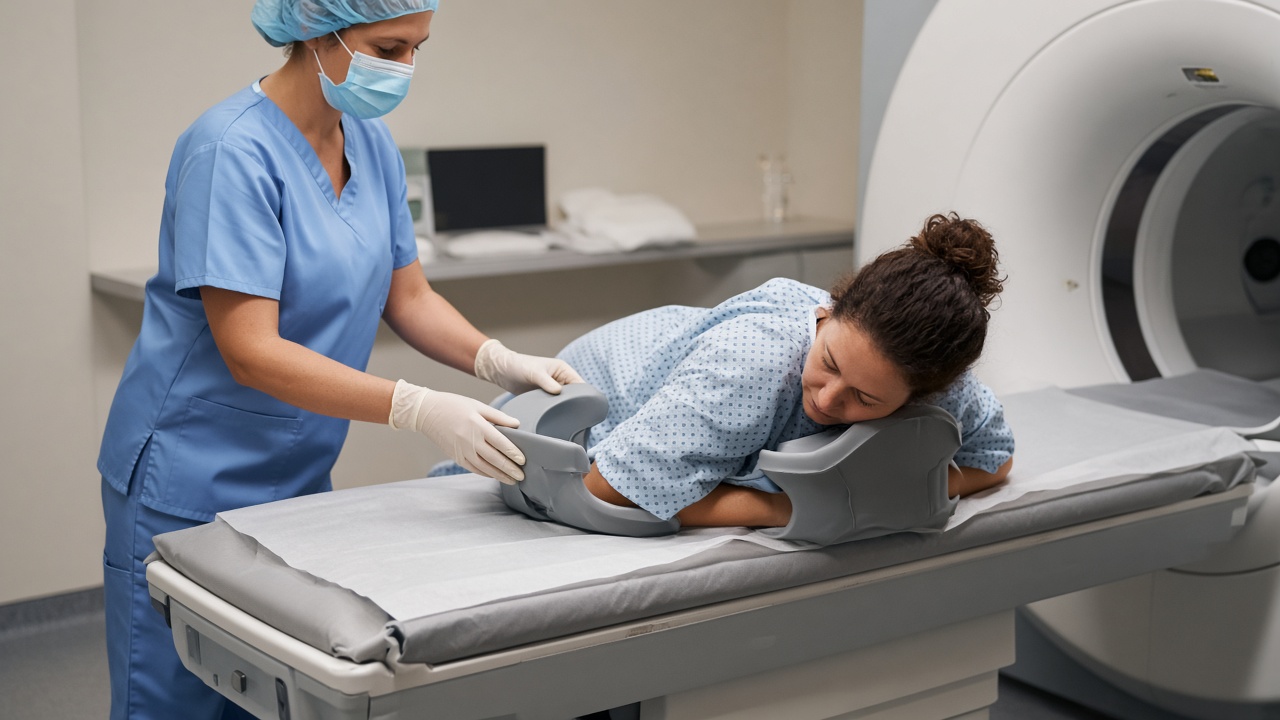
You lie face down with the breasts positioned in a dedicated coil. Intravenous contrast is essential for a diagnostic breast MRI, because the images depend on how quickly tissue takes up and releases contrast over time. The examination takes about 30 minutes.
Timing matters for women who still menstruate. Scans are usually scheduled between roughly day 7 and day 14 of the cycle, when hormonal background enhancement is lowest and the images are easiest to interpret.
What a result means
Findings are classified on the BI-RADS scale, which translates the images into a recommendation: routine follow-up, short-interval follow-up, or biopsy. As with all imaging, MRI does not provide a tissue diagnosis; that requires a biopsy. A breast care team reviews the images together with your examination and any earlier scans.
If you are worried about a lump or a change in your breast, contact your GP rather than booking an imaging test yourself. The right first examination depends on your age and symptoms, and a clinician can direct you to it.